

Better words for goods include products, merchandise, wares, commodities, items, supplies, stock, and belongings.
Goods is a common English word. We use it when we talk about things people make, buy, sell, or use. For example, a shop sells goods like clothes, food, shoes, and toys.
But using the same word again and again can make writing feel dull. Learning synonyms for goods helps you choose better words for different situations.
These words are useful for students, teachers, bloggers, and content writers. They can also help you speak with more confidence. Some words are best for shopping, while others work well in business, trade, or daily life.
In this guide, you will learn 50 alternatives, their simple meanings, and examples. You will also learn when to use each word.
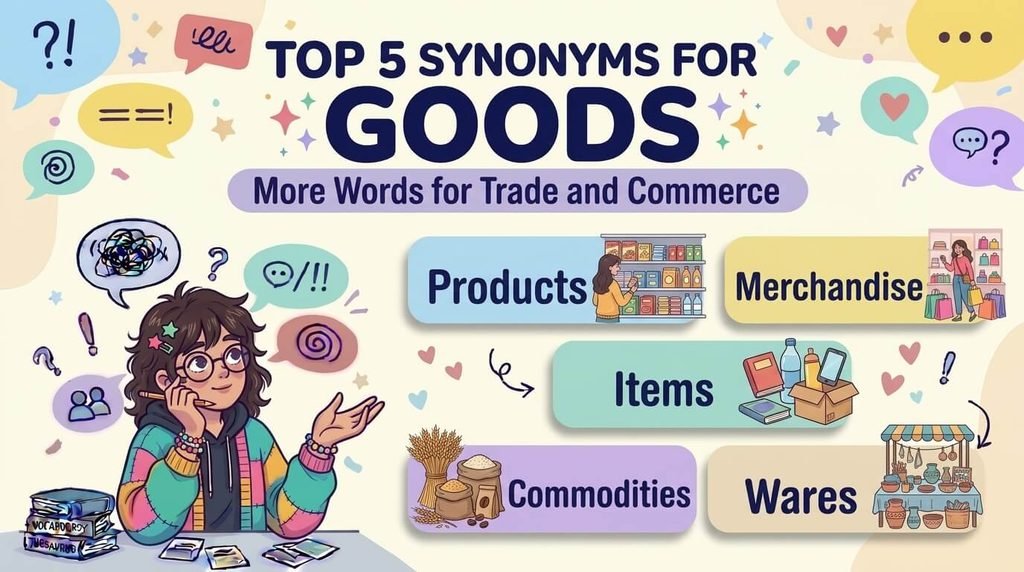
Top 5 Synonyms for Goods
- Products
- Merchandise
- Items
- Wares
- Commodities
Next 5 Synonyms for Goods
- Articles
- Supplies
- Stock
- Materials
- Possessions
Pronunciation of Goods
- Phonetic spelling: goodz
- IPA: /ɡʊdz/
- Simple breakdown: GUDZ
- Sound: The word sounds like “good” with a /z/ sound at the end.
Syllables of Goods
Goods = Goods
- Syllable breakdown: Goods
- Number of syllables: 1
It is a one-syllable word.
Say it as one short sound: GUDZ.
When to Use Synonyms for Goods
The best alternative depends on what you are talking about. Goods can mean products for sale, things people own, or materials used to make something.
| Situation | Best word | Example |
| General products | Products | We sell beauty products. |
| Shop items | Merchandise | The store sells sports merchandise. |
| Business and trade | Commodities | Oil is an important commodity. |
| Market stalls | Wares | The seller displayed his wares. |
| Things in a shop | Stock | The shop has new stock. |
| Things people own | Possessions | She packed her possessions. |
| Food items | Groceries | I bought groceries today. |
| Factory materials | Materials | The factory needs more materials. |
| Things sold online | Items | I ordered three items. |
| Things sent to customers | Shipments | The shipments arrived today. |
Quick tip: Use products for things made to sell, merchandise for items offered by a business, and possessions for things someone owns. These words are related, but they are not interchangeable in every sentence.
Comparison Table: Top 10 Synonyms for Goods
| Word | Simple meaning | Best usage |
| Products | Things made for sale | Business |
| Merchandise | Items sold by a store | Retail |
| Items | Individual things | Everyday English |
| Wares | Things offered for sale | Markets |
| Commodities | Tradeable products or raw materials | Economics |
| Articles | Individual objects | Formal writing |
| Supplies | Things needed for a task | Work and school |
| Stock | Goods kept for sale | Shops |
| Materials | Things used to make products | Manufacturing |
| Possessions | Things owned by someone | Personal property |
List of 50 Synonyms for Goods
Note: Goods has more than one meaning. Some alternatives below refer to products for sale, while others refer to personal property, food, materials, or transported cargo. Choose the word that matches your meaning.
1. Products
Meaning
Products are things that people make or grow to sell.
Examples
- This company makes beauty products.
- The store sells fresh products every day.
2. Merchandise
Meaning
Merchandise means things that a shop or business offers for sale.
Examples
- The store displayed its new merchandise.
- I found some great merchandise at the mall.
3. Items
Meaning
Items are separate things that people can buy, use, or own.
Examples
- I added three items to my shopping cart.
- These items are on sale today.
4. Wares
Meaning
Wares are things that people make or sell.
Examples
- The seller placed her wares on a table.
- Local artists sell their wares online.
5. Commodities
Meaning
Commodities are products or raw materials that people buy and sell.
Examples
- Coffee and sugar are common commodities.
- Oil is traded as a global commodity.
6. Articles
Meaning
Articles are individual objects or things, often made or sold.
Examples
- The shop sells leather articles.
- We packed all the articles carefully.
7. Supplies
Meaning
Supplies are things needed for work, school, or daily use.
Examples
- The school ordered new art supplies.
- We need more cleaning supplies.
8. Stock
Meaning
Stock means goods that a store keeps ready to sell.
Examples
- The shop received fresh stock yesterday.
- Winter stock is now available.
9. Inventory
Meaning
Inventory is the list or total amount of goods a business has.
Examples
- The manager checked the store’s inventory.
- We need to update our inventory today.
10. Produce
Meaning
Produce means food and other things grown or made, especially on farms.
Examples
- The market sells fresh local produce.
- We bought organic produce from a farm.
11. Merch
Meaning
Merch is a short, informal word for merchandise, often linked to a brand or event.
Examples
- I bought some band merch at the concert.
- The creator sells merch on her website.
12. Purchases
Meaning
Purchases are things that people have bought.
Examples
- Keep your receipts for online purchases.
- Her purchases arrived in two boxes.
13. Offerings
Meaning
Offerings are products or services that a business makes available to customers.
Examples
- The company added new product offerings.
- Their latest offerings include home decor.
14. Goods for Sale
Meaning
Goods for sale are things that people can buy from a seller.
Examples
- The market has many goods for sale.
- All goods for sale have clear price tags.
15. Consumer Products
Meaning
Consumer products are things made for people to use or enjoy.
Examples
- The brand makes safe consumer products.
- Many consumer products come with a warranty.
16. Retail Products
Meaning
Retail products are things sold directly to customers in shops or online stores.
Examples
- The website features new retail products.
- These retail products are popular with families.
17. Trade Goods
Meaning
Trade goods are things bought and sold between people, companies, or countries.
Examples
- The port handles trade goods from many countries.
- Textiles are important trade goods.
18. Sale Items
Meaning
Sale items are products offered at lower prices.
Examples
- I found several sale items online.
- The store marked its sale items clearly.
19. Provisions
Meaning
Provisions are food and other supplies kept for use.
Examples
- We packed provisions for the long trip.
- The ship carried enough provisions for its crew.
20. Foodstuffs
Meaning
Foodstuffs are different kinds of food used or sold.
Examples
- The shop imports foodstuffs from Europe.
- Rice and flour are common foodstuffs.
21. Groceries
Meaning
Groceries are food and household products bought from a grocery store.
Examples
- Dad brought home the groceries.
- I need to buy groceries after work.
22. Household Goods
Meaning
Household goods are things used inside a home.
Examples
- The store sells affordable household goods.
- We donated our old household goods.
23. Belongings
Meaning
Belongings are the things that someone owns.
Examples
- She collected her belongings before leaving.
- Please keep your belongings safe.
24. Possessions
Meaning
Possessions are things that belong to a person.
Examples
- His possessions were kept in a small box.
- She gave away some of her old possessions.
25. Property
Meaning
Property means things that a person or business owns.
Examples
- The lost property was returned to its owner.
- He insured his personal property.
26. Effects
Meaning
Effects can mean personal things that someone owns, especially when they are packed or moved.
Examples
- The hotel staff returned her personal effects.
- His effects were packed into two bags.
27. Chattels
Meaning
Chattels are movable personal items that someone owns.
Examples
- The agreement listed the household chattels.
- The family divided the valuable chattels.
28. Movables
Meaning
Movables are personal items that can be moved from one place to another.
Examples
- The auction included several household movables.
- The movers packed the movables first.
29. Personal Property
Meaning
Personal property means things a person owns that are not land or buildings.
Examples
- The policy covers personal property.
- She made a list of her personal property.
30. Valuables
Meaning
Valuables are items that have a high price or special value.
Examples
- Keep your valuables in a safe place.
- The hotel offers a safe for guests’ valuables.
31. Assets
Meaning
Assets are valuable things owned by a person or business.
Examples
- The company listed its main assets.
- Her home is one of her biggest assets.
32. Furnishings
Meaning
Furnishings are items such as tables, chairs, and lamps used in a room.
Examples
- The hotel has modern furnishings.
- We bought new furnishings for the living room.
33. Furniture
Meaning
Furniture means useful items such as beds, tables, and chairs.
Examples
- The store sells wooden furniture.
- We moved the furniture into the new house.
34. Gear
Meaning
Gear means equipment or useful things needed for an activity.
Examples
- We bought camping gear for the trip.
- The sports store sells quality hiking gear.
35. Paraphernalia
Meaning
Paraphernalia means a collection of items used for a particular activity.
Examples
- The artist packed her painting paraphernalia.
- The shop sells camping paraphernalia.
36. Implements
Meaning
Implements are tools or objects used to do a job.
Examples
- The farmer cleaned his garden implements.
- The kitchen has all the cooking implements we need.
37. Tools
Meaning
Tools are objects used to make, repair, or build things.
Examples
- The worker placed his tools in a box.
- We need better tools for this job.
38. Appliances
Meaning
Appliances are machines used for household tasks.
Examples
- The store offers modern kitchen appliances.
- These appliances save time and energy.
39. Hardware
Meaning
Hardware means tools, building supplies, and metal items used for repairs or construction.
Examples
- We bought hardware for the new shelves.
- The hardware store sells nails and screws.
40. Materials
Meaning
Materials are things used to make or build other things.
Examples
- The factory needs more raw materials.
- We chose strong materials for the project.
41. Fabrics
Meaning
Fabrics are cloth materials used to make clothes and other items.
Examples
- The shop sells colorful fabrics.
- She chose soft fabrics for the curtains.
42. Textiles
Meaning
Textiles are cloth and materials made by weaving, knitting, or similar methods.
Examples
- The company exports textiles to many countries.
- Cotton textiles are popular in the clothing industry.
43. Cloth
Meaning
Cloth is material made from fibers and used for clothes or other products.
Examples
- I bought some cloth for a new dress.
- This cloth feels soft against the skin.
44. Cargo
Meaning
Cargo means goods carried by a ship, plane, truck, or train.
Examples
- The ship carried cargo across the ocean.
- The truck delivered its cargo safely.
45. Freight
Meaning
Freight means goods moved from one place to another by road, rail, air, or sea.
Examples
- The company sends freight by train.
- Freight costs increased this month.
46. Shipments
Meaning
Shipments are groups of goods sent to a customer or another place.
Examples
- Our shipments arrived this morning.
- The company tracks all customer shipments.
47. Consignments
Meaning
Consignments are batches of goods sent to someone for delivery or sale.
Examples
- The store received a new consignment of shoes.
- The seller checked the consignment before signing.
48. Exports
Meaning
Exports are goods sold and sent to other countries.
Examples
- The country increased its textile exports.
- Fresh fruit is among the region’s major exports.
49. Imports
Meaning
Imports are goods bought from other countries and brought into a country.
Examples
- The store sells imported electronics.
- The country reduced its imports this year.
50. Manufactures
Meaning
Manufactures are products made in factories or through industrial work.
Examples
- The company sells its manufactures overseas.
- The factory displayed its latest manufactures.
Frequently Asked Questions About Goods
1. What is another word for goods?
Some common alternatives are products, merchandise, wares, items, commodities, and stock. The best choice depends on the sentence.
2. What are the five best synonyms for goods?
The five useful alternatives are:
- Products
- Merchandise
- Items
- Wares
- Commodities
These words work well in shopping, business, and everyday writing.
3. What is a formal word for goods?
Merchandise, commodities, products, and articles are useful formal alternatives. Commodities is especially common in business and economics.
4. What is the difference between goods and products?
Goods usually means things made or sold, often as a group. Products usually refers to individual things made or grown for sale.
For example, a store sells electronic goods, while a company makes electronic products.
Oxford Learner’s Dictionaries+1
5. What is the difference between goods and merchandise?
Goods is a general word for things made or sold. Merchandise often focuses on items that a store or business offers to customers.
6. What are goods called in business?
In business, goods may be called products, merchandise, commodities, inventory, or stock. The correct word depends on whether you mean items for sale, raw materials, or stored products.
7. Are goods and commodities the same?
Not always. Goods is a broad term for things made or sold. Commodities usually refers to basic products or raw materials that can be traded, such as oil, wheat, and coffee.
8. What is the opposite of goods?
The opposite depends on the meaning.
- Services: Work done for someone.
- Nothing: No items or possessions.
- Waste: Unwanted or useless material.
In economics, goods and services are often discussed together.
Conclusion:
Learning synonyms for goods can make your English stronger and your writing more interesting. Words like products, merchandise, wares, and commodities help you explain ideas in a clear way.
These goods synonyms are useful for students, teachers, bloggers, and writers. They can improve your essays, emails, reading, and daily conversations.
Remember that each word has its own meaning. Choose the right alternative for the situation. Practice these words in your schoolwork, social media captions, and daily talks.
You do not need to learn all 50 words at once. Start with five words and use them in simple sentences. Keep learning a little every day.
Good vocabulary gives you more ways to share your thoughts. Keep learning, keep practicing, and let every new word make your English better!
READ MORE: 50 Synonyms for So Much: Better Words for Every Context (2027)




Pingback: 50 Synonyms for Hunger: Better Words for Appetite and Desire